Sunday, February 25, 2007
Duh-pressing


NPR Goes Blue Collar
Friday, February 23, 2007
Work Life Solutions: Live Near Work
 Some lucky Baltimore workers are getting paid to live near their workplace. "Live near work" incentive programs can be a great redevelopment tool. I noticed these in London.. particularly for health care and other emergency service workers. I believe Philadelphia had a similar initiative around Penn. My planner friends are very familiar with these types of programs. But I think they are less known with the HR crowd.
I've been doing a lot of research on "work life balance" initiatives and I haven't seen these types of initiatives in any of the literature. Could this be the next generation of work-life balance practices? I would think this would be very appealing to non-profits or public agencies. After all, revitilizing the local area is part of their mission. Why not embrace work-life balance initiatives that serve multiple purposes?
Thursday, February 22, 2007
Job Corps Makeover
Monday, February 19, 2007
The Strength Approach
 I'm half way through "Now Discover Your Strengths" -- Marcus Buckingham's latest book. (Buckingham is a Gallup pollster who has authorized, "First, Break All the Rules.") A clever colleague recommended the book. (Thanks MK!)
It's very interesting. First of all, I can't tell you how refreshing it is to have some test tell me that I actually have a few strengths. I'm so completely focused on fixing weaknesses, that I think I lost site of my talents. Memory is not one of my strengths, so I only recall three of them... Harmonizing, Connectedness, Intellectualizing. In step with strength, number 3, I'm currently fixated on the methodology behind the assessment.
The more interesting part is the author's plea to quit focusing on weaknesses and to further develop your strengths. I suspect we could learn from this when it comes to career counseling and employment policies. A wise person at a meeting I attended last week explained it this way, "We need to focus on the internal, not just the external. We should help kids understand their strengths and abilities." So true.
The Arts, NCLB and Workforce Development
 A few weeks ago, I spoke at a MetLife panel put together by the Greater Pittsburgh Arts Council. It was a wonderful experience. My fellow panelists and the moderator were amazing. The audience was lively, thoughtful and engaged. It was probably my favorite speaking engagement, ever. How can't you get excited when you talk about inspiring learning and creativity through the arts?
Apparently others are excited by the topic, too. The event had very strong attendance, and lots of folks picked up the article about the forum that originally appeared in the Post-Gazette. Then I noticed the title of the article. For the record, the title is just plain wrong. We NEVER suggested that arts are more beneficial than science and math. We talked about how the arts might enhance learning in these areas and that NCLB could, in fact, be an opportunity to enhance arts education. After all, some schools with very strong arts programs have seen tremendous improvement in their PSSA scores.
Here's the coverage:
January 7: Pittsburgh Post-Gazette
Feb 6: Washington's Kitsap Sun
Feb 7: Blog
Feb 11: California's Redding Searchlight
Feb 12: Wyoming's Jackson Hole Star Tribune
Feb 13: Wyoming's Casper Star Tribune
Feb 13: Government Innovator's Network - Harvard School of Law
As I said, we had a great conversation at the event. I'm hoping this is the beginning of future discussions about the arts and economic development. I find it odd that when people talk about economic development and the arts, they often discuss the need to attract artists and other creative types to an area.
Why don't we try to grow and foster our own creative capital? This was a topic of discussion when I was in London two years ago. Check out their efforts to foster regional creativity via Creative London.
Belated News - Local Employment Dynamics Reflections
 Sadly, the HCPI blog has been woefully neglected over the last few months. I'll spare you the excuses and move on to meaningful content...
First, I should recognize my colleagues at the Three Rivers Workforce Investment Board and Carnegie Mellon's Center for Economic Development. We recently presented the "Managing an Aging Workforce" report and information-sharing process at the Local Employment Dynamics State Partners conference held at the Brookings Institution in January, 2007. View our presentation here.
Here are a few things I took away from the conference:
- Southwest PA rocks! Our drill down on the aging workforce topic, combined with an information dissemination strategy is noteworthy. Sure, data can be cool and interesting. (Or at least, so say the data geeks.) We went a step further and made it accessible.
- It's worth thinking about the gender differences of the region's aging workforce. Look at Maine's manufacturing analysis. Would we have skilled labor shortages if we effectively recruited, retained and advanced women in this industry?
- Data sources such as LED are essential. It's a shame not every state participates and that much time must be spent maintaining support for/funding for this program.
- LED presents some very cool opportunities for mapping. (See Peter Haas' presentation on the LED site.)
- There are some frighteningly smart people working on LED. The presentation about synthetic data made my brain hurt.
- My colleagues at CED and the TRWIB are great presenters, brilliant researchers, pragmatic policy analysts... and a heck of a lot of fun!
Wednesday, September 13, 2006
Talent Attraction, Wyoming Style
 Wyoming is recruiting workers from Michigan in the hopes of addressing labor shortages and growing the economy and population. It's good to see an article that discusses the allure of rural living. So much "talent attraction" seems to stereotype a desireable locale as a city with loft apartments. Let's face it, a lot of people want more peaceful environment. And some actually like winter! Bottom line -- having a strong job offer is critical.
My other thought about this article is that it is further evidence of the labor market shortage faced by the energy industry. The problem is probably worse in a sparsely populated state such as Wyoming, but things aren't looking too good for SWPA. After all, the industry has a disproportionately older workforce and people are bound to eventually leave the workforce. My question is, "What are we doing to build a pipeline of future workers?"
Tuesday, August 29, 2006
What Happened to US Air?
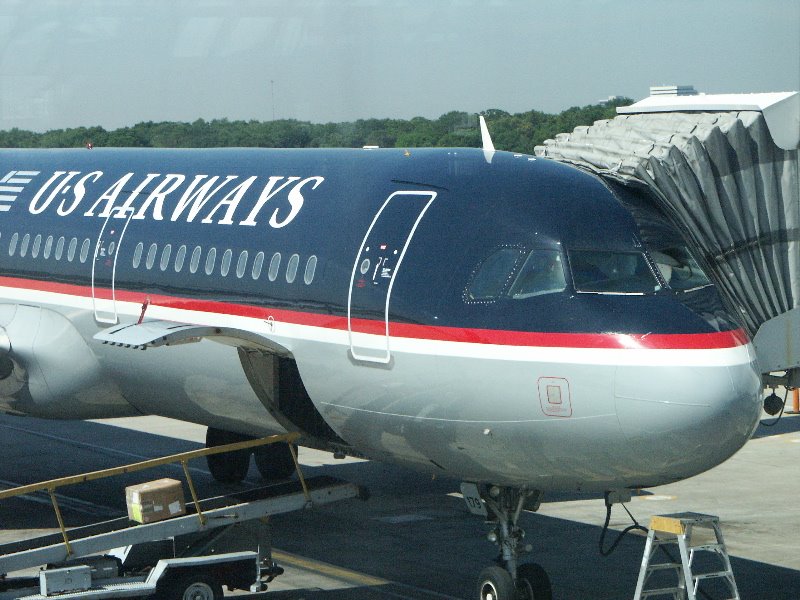 Five years ago Pittsburgh received some particularly bad economic news -- US Airways announced that it planned to lay off a significant number of workers. Politicians and community leaders scrambled to respond and promises for worker assistance were made. So what happened to the former US Airways workers?
In a few weeks, the Institute of Politics will release a "Case in Point" publication that looks at how our region's workforce system responded to these layoffs. There's a story on the topic in last weekend's Tribune Review. http://www.pittsburghlive.com/x/pittsburghtrib/business/s_467929.html
One of the most striking "lessons learned" is the fact that our workforce system does not do a very robust job tracking its own performance. Thus, we have insufficient data about who we served, how we served them and what happened as a result.
Tuesday, August 08, 2006
Picture This
A large auditorium is filled with high school students. They're beginning a week of healthcare career exploration activities. They shout out the names of the healthcare professions they know. “Doctor!” “Nurse!” “Dentist!” The lights dim and the students see picture of an emergency room. Text appears above the people in the picture, identifying their job and regional labor statistics. “What’s a radiology tech?” one student asks. “What’s an Associate’s degree?” asks another. With a look of shock, a girl in the front row whispers, “Those numbers can’t be right. I thought everyone in healthcare was rich.”

