Wednesday, May 17, 2006
Aging Workforce News
In preparation for our June 23rd forum focused on the aging regional workforce, I've been knee deep in reports about the potential impact of retiring baby boomers. There's a lot of speculation about what this rather influential cohort is going to do to the economy. The Aging Workforce News blog has helped me keep track of the most recent reports and events on the topic. Check it out...


Friday, May 05, 2006
FL May Mandate Middle School Career Programs
Check out, "Career Plans by Age 12: Maybe in Florida." The title sounds scary, but the concept is right on track.
Wednesday, May 03, 2006
Super Wednesday
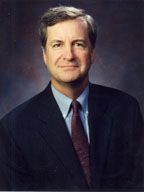 On Wednesday, May 10th, Enrico's Tazza D'Oro Cafe, the Union Project, the Urban League of Pittsburgh and the University of Pittsburgh Human Capital Policy Initiative will welcome Mark Roosevelt, Superintendent of Pittsburgh Public Schools to a community forum focused on the future of our schools.
Please note that the date for this event recently changed. The forum will be held on Wednesday, May 10, 2006 at the Union Project (801 N. Negley Avenue, Pittsburgh, PA) from 6:30-8:00 pm. (The event was previously scheduled for 5/4).
Mark Roosevelt will be joined by community and educational leaders for this important discussion. Other speakers will include: Esther Bush (Urban League of Pittsburgh), Michael Johnson (Carnegie Mellon University), Vic Papale (A+ Schools), and Muzz Meyers (Westinghouse High School).
Community input is essential to the discussion. Please join us for this very important conversation.
On Wednesday, May 10th, Enrico's Tazza D'Oro Cafe, the Union Project, the Urban League of Pittsburgh and the University of Pittsburgh Human Capital Policy Initiative will welcome Mark Roosevelt, Superintendent of Pittsburgh Public Schools to a community forum focused on the future of our schools.
Please note that the date for this event recently changed. The forum will be held on Wednesday, May 10, 2006 at the Union Project (801 N. Negley Avenue, Pittsburgh, PA) from 6:30-8:00 pm. (The event was previously scheduled for 5/4).
Mark Roosevelt will be joined by community and educational leaders for this important discussion. Other speakers will include: Esther Bush (Urban League of Pittsburgh), Michael Johnson (Carnegie Mellon University), Vic Papale (A+ Schools), and Muzz Meyers (Westinghouse High School).
Community input is essential to the discussion. Please join us for this very important conversation.
Paying for Career Planning
 Now I understand the critical career planning article I mentioned in an earlier post. Apparently, the April 25th Washington Post included a piece about the rise in career counseling services for kids. The article highlights efforts by the Boys and Girls Club, College Recruiter and others.
The story mentions some positive and negative points of career planning. However, it is an overwhelmingly positive story. The main critiques: career planning places too much stress on kids and kids need life skills ed, not career planning. Isn't finding and keeping a job an important life skill?
I'm taking great pleasure in this increased attention to career planning. I'm even excited about the critical commentary. Who knew people are think about this enough to form an opinion?
I'm no Pollyanna. The career counseling field has a great deal of variety in quality. (For an in-depth look at this, you must read Barbara Ehrenreich's book, Bait & Switch.)
I'm also a little nervous about services that promote 10-year plans for teens. (See Career Choices website. Upon closer inspection, it's not nearly as scary as it sounds. They aren't asking kids to make a one time decision that will limit choices. They're aligning education and career interests. I think they have a marketing problem, not a product problem.)
One of the themes of the article is that career planning is an emerging industry. There's an increased consumer interest and lots of emerging efforts to meet this market demand. This is good and bad news for consumers. More choices means more tough decisions. How do you choose wisely?
Now I understand the critical career planning article I mentioned in an earlier post. Apparently, the April 25th Washington Post included a piece about the rise in career counseling services for kids. The article highlights efforts by the Boys and Girls Club, College Recruiter and others.
The story mentions some positive and negative points of career planning. However, it is an overwhelmingly positive story. The main critiques: career planning places too much stress on kids and kids need life skills ed, not career planning. Isn't finding and keeping a job an important life skill?
I'm taking great pleasure in this increased attention to career planning. I'm even excited about the critical commentary. Who knew people are think about this enough to form an opinion?
I'm no Pollyanna. The career counseling field has a great deal of variety in quality. (For an in-depth look at this, you must read Barbara Ehrenreich's book, Bait & Switch.)
I'm also a little nervous about services that promote 10-year plans for teens. (See Career Choices website. Upon closer inspection, it's not nearly as scary as it sounds. They aren't asking kids to make a one time decision that will limit choices. They're aligning education and career interests. I think they have a marketing problem, not a product problem.)
One of the themes of the article is that career planning is an emerging industry. There's an increased consumer interest and lots of emerging efforts to meet this market demand. This is good and bad news for consumers. More choices means more tough decisions. How do you choose wisely?
Monday, May 01, 2006
Anti-Career Planning Article
Today, the Post-Gazette ran a Washington Post article that slams career planning for kids. The author's argument is that kids should have a chance to explore, not get stressed out about having the right internship or identifying the perfect job.
"Young people should be allowed to explore their interests for the sake of exploring their interests, not to get a head start in the working world. Teens should be able to choose paid jobs and volunteer work fairly casually, not for the impact these activities will have on their resumes. Yes, the working world is competitive these days, but that doesn't mean people benefit much if they start worrying about resumes and internships at 12 instead of 18."
Ms. Slayter isn't describing career planning. Well... at least not GOOD career planning. She's describing "tracking."
Here's the part of the article that really irritated me:
"The truth is, most of us these days change our majors several times in college, change careers several times in our 20s, and change careers a few more times before we retire. It's completely routine for people to hit age 40, 50 or 60 and still not have found their professional niche, or to be in pursuit of a new one. No amount of planning and premature decision-making when you're still picking candy out of your braces can circumvent this process of self-discovery."
Slayter is right. We will change careers. But this process isn't easy breezy for all Americans. For some, it's a very difficult and expensive process. This is why we need to build skills that allow people to grow in their careers throughout their life.
Thursday, April 27, 2006
Surprising Hiring Practices
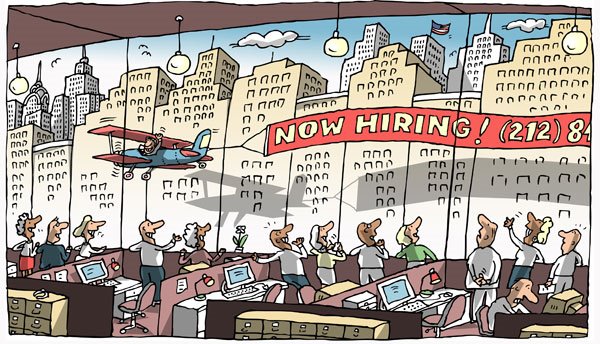 How do you think a corporate recruiter finds people to fill positions? Are you envisioning a stack of resumes? A job fair?
Most people assume that hiring managers select from a pool of people who are actually looking for a new job. However, companies are realizing that the best pool of candidates is already working. They may even be working in an entirely different field!
Check out this NYTimes article about modern recruiting practices. San Franciso State management guru, Dr. John Sullivan contributes to the article. Sullivan has the best quote: "The first rule of recruiting is that the best people already have jobs they like... It's amazing that so many companies still use job fairs to recruit talent. Who goes to job fairs? People without jobs! All you get are worthless résumés and lots of germs."
What's the alternative? According to this article: walking the aisles of chain stores and restaurants, buying merchandise, ordering meals nad keeping an eye out for stand-out employees is the best way to find true talent.
Read more...
How do you think a corporate recruiter finds people to fill positions? Are you envisioning a stack of resumes? A job fair?
Most people assume that hiring managers select from a pool of people who are actually looking for a new job. However, companies are realizing that the best pool of candidates is already working. They may even be working in an entirely different field!
Check out this NYTimes article about modern recruiting practices. San Franciso State management guru, Dr. John Sullivan contributes to the article. Sullivan has the best quote: "The first rule of recruiting is that the best people already have jobs they like... It's amazing that so many companies still use job fairs to recruit talent. Who goes to job fairs? People without jobs! All you get are worthless résumés and lots of germs."
What's the alternative? According to this article: walking the aisles of chain stores and restaurants, buying merchandise, ordering meals nad keeping an eye out for stand-out employees is the best way to find true talent.
Read more...
Tuesday, April 25, 2006
Discrimination or Standard Operating Procedure
Most of the HCPI blog postings have focused on tools to help build people's awareness of career resources. However, being aware of one's interests, strengths and aptitudes is clearly not enough to achieve "career success." All too often, other factors stand in our way. One of the most perverse barriers is that of racism. Pitt's Lu-in Wang has recently published, "Discrimination by Default: How Racism Becomes Routine." This book explores people's subtle, discriminatory behaviors. Here's a good post-gazette teaser about the book.
This is such an important topic, but many people are afraid to engage in the conversation. Another great read on the topic: "White Privilege: Unpacking the Invisible Knapsack." (Thanks to one of my students for making me aware of this article!) In this article, Peggy McIntosh identifies the daily effects of white privilege. For example, one can arrange to be in the company of people of his/her own race most of the time, one can avoid spending time with people he/she has been trained to mistrust, one can be pretty sure of renting or owning a home in an affordable area, one can go shopping without being followed or harassed. The list is long and disturbing but sometimes discomfort leads to the most important conversations.
Thursday, April 20, 2006
Smart Policy Workforce Blog
Yay! Some workforce blogging company out here in cyberland. Check out: http://wf-swpa.blogspot.com/. You can count on CED for thoughtful analysis of workforce issues.
Grey Matters
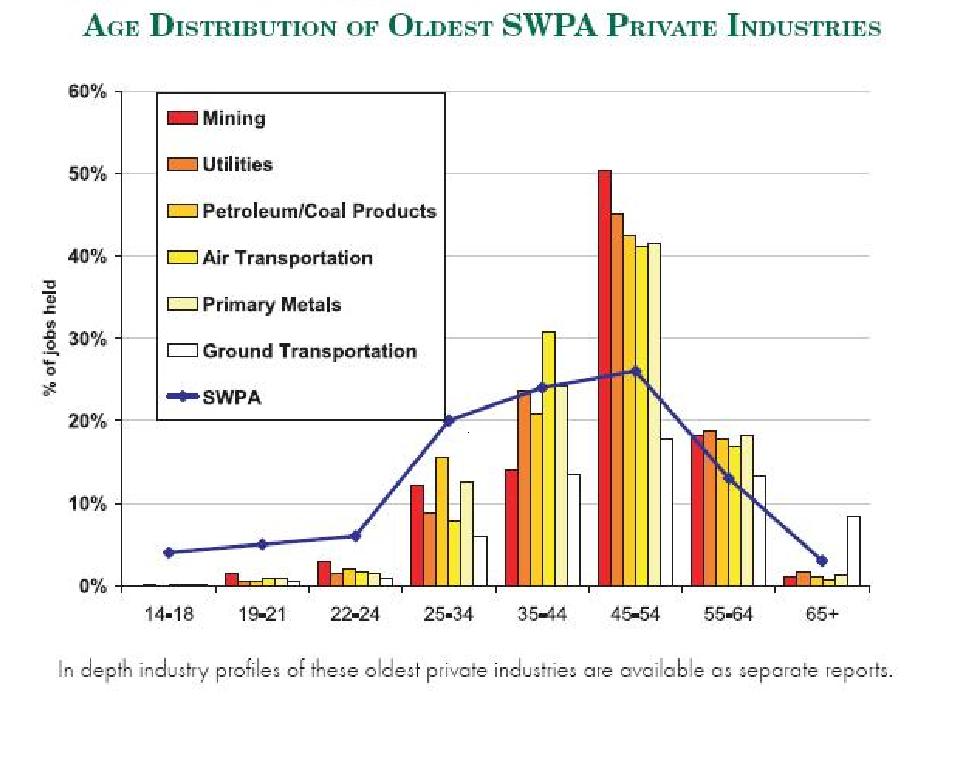 Although your own retirement may seem like a far off fantasy world, I've got news for you -- you'd better start thinking about how mass retirements could impact your future. Is your business (or organization) prepared for the aging of its workforce? (If you're in mining, coal, utilities, primary metals or ground transportation business; you'd better start thinking about it!)
Understanding the implications of population dynamics is also essential for economic and workforce development professionals. For those investing in our region's economic competitiveness, retirements could seriously change the way they do business. Key questions to consider: Are there particular industries that will be particularly hard hit by retirements? Are businesses planning for a workforce shortage? Are employers restructuring their businesses to address future brain drain? Will this spell opportunity for younger workers or attempts to retain older employees? Finally, does the aging of our population present unique opportunities for economic development?
So many questions...
And now for some answers (or at least better questions)...The Carnegie Mellon University's Center for Economic Development has conducted a study on behalf of the Three Rivers Workforce Investment Board, "Managing the Changing Workforce in Southwestern Pennsylvania: A Closer Look at Issues Related to Our Region's Aging Workforce." This report explores the issue and examines how changing demographics may shape the future of the region. Read the report here.
The Institute of Politics will conduct a series of events to promote dialogue and action on this topic. Our first event is a forum on June 23rd, "The Aging of the Workforce: Crisis or Opportunity." To receive an invite to the event, please contact me at vkl1@pitt.edu.
Although your own retirement may seem like a far off fantasy world, I've got news for you -- you'd better start thinking about how mass retirements could impact your future. Is your business (or organization) prepared for the aging of its workforce? (If you're in mining, coal, utilities, primary metals or ground transportation business; you'd better start thinking about it!)
Understanding the implications of population dynamics is also essential for economic and workforce development professionals. For those investing in our region's economic competitiveness, retirements could seriously change the way they do business. Key questions to consider: Are there particular industries that will be particularly hard hit by retirements? Are businesses planning for a workforce shortage? Are employers restructuring their businesses to address future brain drain? Will this spell opportunity for younger workers or attempts to retain older employees? Finally, does the aging of our population present unique opportunities for economic development?
So many questions...
And now for some answers (or at least better questions)...The Carnegie Mellon University's Center for Economic Development has conducted a study on behalf of the Three Rivers Workforce Investment Board, "Managing the Changing Workforce in Southwestern Pennsylvania: A Closer Look at Issues Related to Our Region's Aging Workforce." This report explores the issue and examines how changing demographics may shape the future of the region. Read the report here.
The Institute of Politics will conduct a series of events to promote dialogue and action on this topic. Our first event is a forum on June 23rd, "The Aging of the Workforce: Crisis or Opportunity." To receive an invite to the event, please contact me at vkl1@pitt.edu.
Subscribe to:
Posts (Atom)

